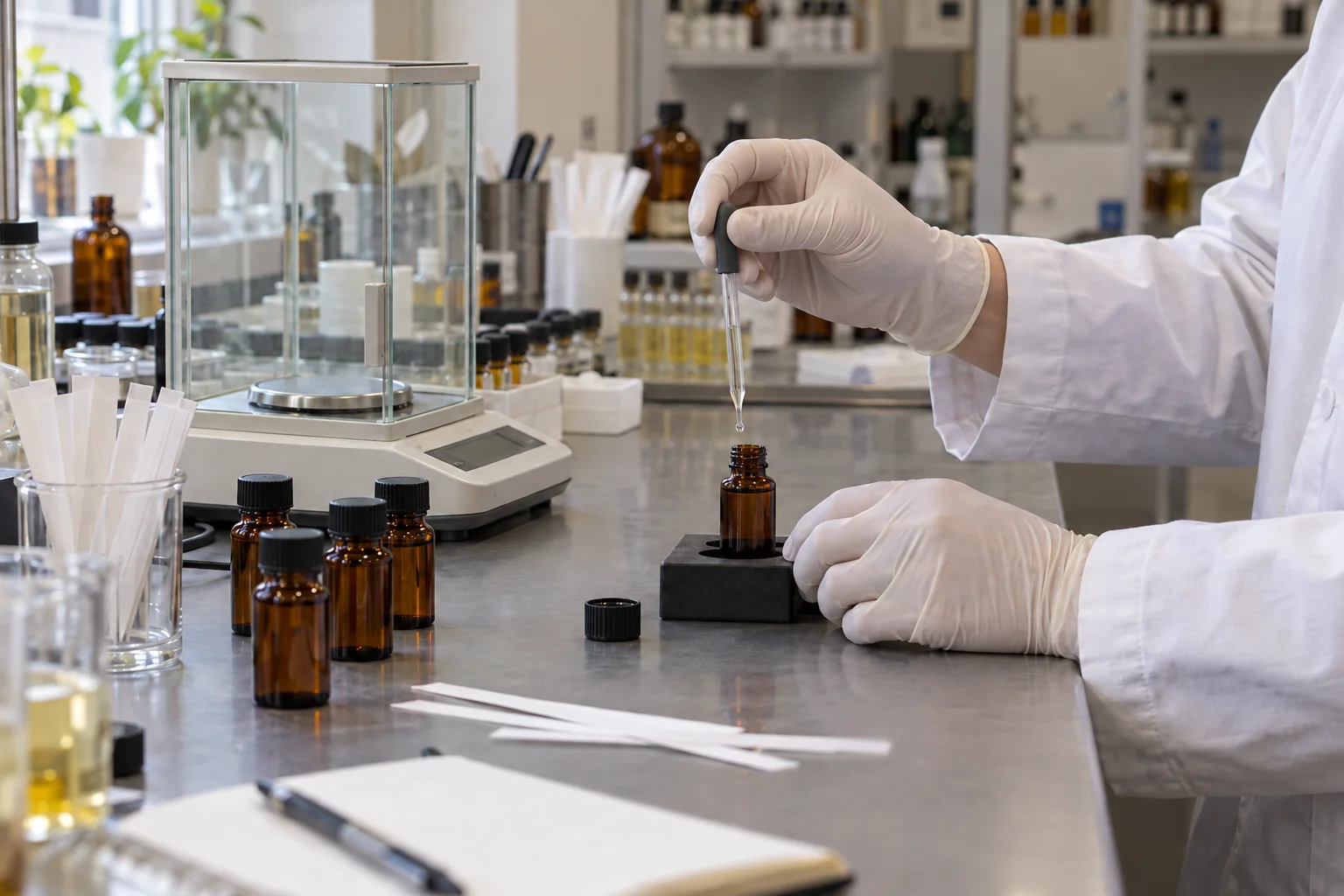
Describe an impression, then make it specific.
Tell Anna the product format, intended customer and scent direction. A reference is useful when you explain which aspect matters: the fresh opening, floral character, woody texture or balance of warmth and sweetness.
- Product
- Spray perfume, body mist or perfume oil; intended use and volume.
- Direction
- A fragrance reference, sample code or description of the impression.
- Preferences
- The intensity, texture and changes you want to compare.
- Requirements
- Sales market, buyer restrictions and requested product statements.
Make sample feedback useful.
Identify the sample
Keep the code, date, product format and sample scope with your feedback. A fragrance concentrate and a finished filled product can represent different evaluation stages.
Compare under similar conditions
Use a consistent method, note the opening and later impression, and describe the change you want. Separate fragrance feedback from bottle and spray feedback.
Approve a traceable version
When a trial is accepted, retain its reference with the agreed formula, intended application and product specification. Review later changes against that version.
THREE SAMPLE SCOPES
Scent trial
Compare fragrance direction and requested changes.
Filled product
Evaluate the formula with its container and dispenser.
Decorated unit
Approve artwork, finish, fit and assembled presentation.
Plan sample work by scope.
A scent trial, filled product and decorated presentation involve different work. Ask for the sample scope, fees, courier arrangements and dates for the current brief.
Discuss fragrance samples